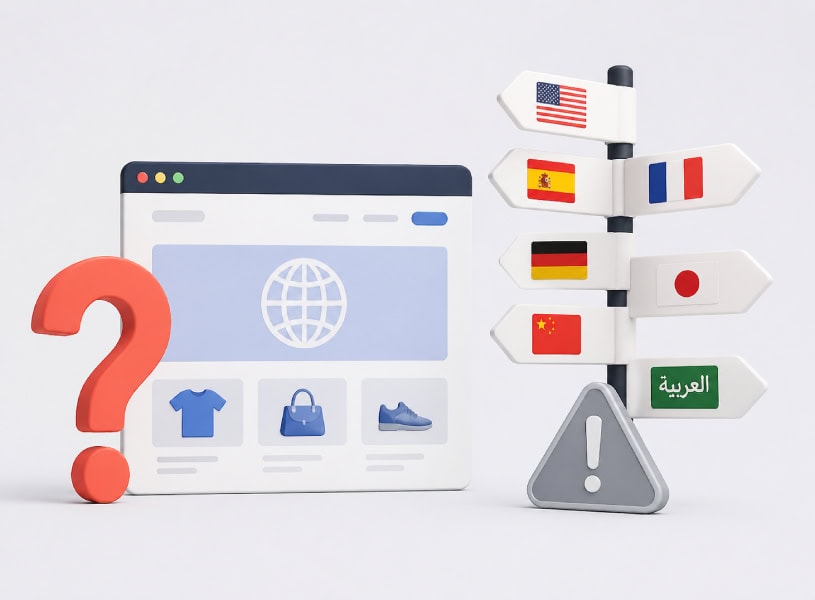
Many customers will ask to do multi-language translation, thinking that multiple languages are more points of inquiry, and it is convenient for non-English customers to view. Unless your company is deeply cultivating the local market of small languages, or the target customers are not good at English, it is really not recommended to do multi-language.
The e-commerce websites we build at Diiamo actually come with multilingual functionality already built in and are optimized for SEO, but we have this feature disabled by default. Whenever a client asks to enable it,I always have to explain the drawbacks of multilingualism to clients and advise them against it.
Why is it not recommended to do multilingual/small language for foreign trade websites?
Making a 2B website multilingual won’t generate many orders or profits; in fact, the multilingual translation feature will slow down page loading times and may eventually lead to issues like broken links, which could negatively impact the SEO performance of the English version on Google. There are many drawbacks.
To profit from a multilingual website, you need to invest significant human, material, and financial resources, as well as time. We recommend starting with an English version; once you’ve achieved good results, you can then add other languages or build a new website specifically for multilingual content.
Poor quality of small language inquiries
English is a very commonWorkplace language, business language...In countries with strong economies, English is generally spoken, and foreign import-export companies are sure to speak English. If a buyer or owner at a foreign company does not speak English, it is likely that the company sources its goods primarily from the local market or neighboring countries, or that it is very small.
When doing business, foreign customers shop around to find the supplier that best suits their needs, and suppliers who speak English often offer better product quality, prices, and service. Therefore, foreign customers will definitely prioritize using English to search for suppliers rather than less common languages.
Even if the owner doesn't speak English, if he wants to get good products at a good price and make his business bigger, he will definitely recruit English-speaking buyers and so on to deal with English-related business. Even if the customers don't know English, they know how to use the translation function, Google Chrome comes with a translation function.

In Google using a small language search out of the supplier is basically a local supplier or counterparts, it is likely to be second-hand dealers, prices and quality is not the best. Foreign companies that do not speak English, even if they send inquiries to Chinese suppliers, may just understand the market and so on, the amount of orders is generally very small.
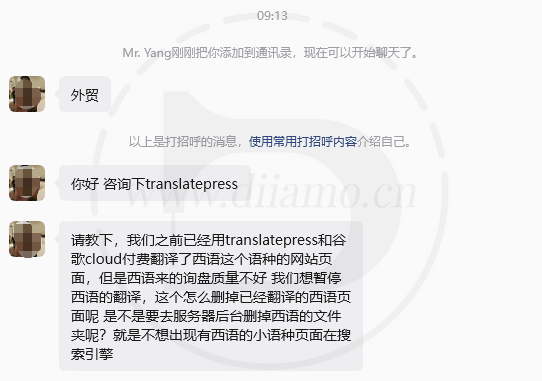
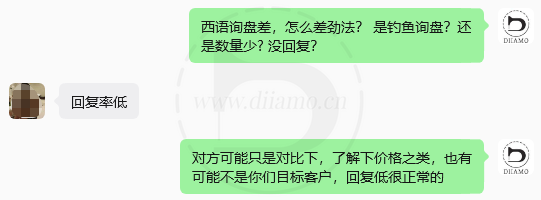
Multilingual translations are riddled with errors and give a bad impression to clients
Multilingual content is almost entirely machine-translated, with only minor manual adjustments made by non-language professionals at most. The translation quality is actually very poor and riddled with errors; international customers may feel that this shows a lack of respect for them and that the supplier isn’t putting in the effort.
Let's look at two real pitfalls:
Example 1: Selling pork to the Middle East is tantamount to “stepping on a mine”.”
Machine translation: Pork products such as “Dongpo Pork” are machine translated directly into Arabic for presentation to Islamic countries in the Middle East.
Severe Consequences: In Islamic countries, pork is strictly forbidden and prohibited by law. Such actions may result in website blocking or product removal at best, and at worst, legal action and substantial fines—equivalent to openly challenging others' religious beliefs and legal systems.
The right thing to do: manually review page content to hide inappropriate content for certain languages/regions.
Example 2: Selling electric vehicles, certification standards can not be “Zhang Guanzhi”
Machine Translation: Your electric bicycle (eBike) complies with U.S. safety standards (CPSC Certification), but the translation plugin directly translated the U.S. standards into Vietnamese for the Vietnamese clients to see.
Serious Consequences: Vietnamese customers were immediately confused because their country mandates its own “CR certification.” Your page lists U.S. standards, making them too afraid to place orders since your products appear “non-compliant.” It's like selling cars in China but only presenting a U.S. driver's license—customers would naturally hesitate to buy.
Correct approach: Manual review of translations and manual adjustment of the corresponding content as well as the translation result.
Example 3: Images appear in different languages, giving an unprofessional impression.
Machine translation: The text in the web images could not be translated, and the images containing Hebrew (Israeli) were displayed directly to the Iranian customers (Persian).
Serious consequences: the client is instantly fired up and will never cooperate.
Correct approach: Create different images for different languages and manually replace the corresponding images for multiple languages.
Example 4: The specificity of the Arabic language
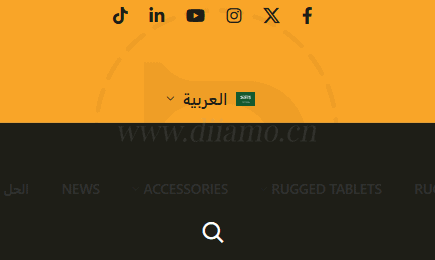
Machine translation: On the Arabic page, the text and typography were automatically changed to right-to-left alignment, but code incompatibility led to typographical errors (below).
Serious consequences: the customer feels that you do not pay attention to him, not professional enough, and lose the opportunity to cooperate.
The right thing to do: handwrite code to fix typographical errors on Arabic pages.
To summarize, multi-language is very easy to lead to many problems, need manual review and adjustment, a lot of workload, and high requirements for professionalism. If your company doesn't want to invest huge human and material resources, Diiamo (www.diiamo.cn) doesn't recommend to do multi-language.
Foreign trade independent site at the beginning only do the English version of the easiest, easiest to get resultsGoogle and other browsers come with a translation function, there are also very many automatic translation plug-ins. Google and other browsers come with a translation function, there are also very many automatic translation plug-ins, click 2 seconds to automatically translate the entire site, do not have to worry about small language customers do not understand English.
Multilingual issues abound
One more language, the number of pages and the number of links to the site will double, 10 more languages will be 10 times, which is a very "scary" thing. This is a very "scary" thing. It means: Google crawler needs to crawl several times more pages, the pressure on the server increases several times, the website volume increases several times, the page loading speed will be slower, the probability of error and the degree of bad consequences increased.
Mallory is in theTranslatePress setup tutorialAs mentioned in the section “The Pitfalls of Automatic URL Translation,” the automatic translation of multilingual slugs/URLs is extremely prone to causing broken links, indexing failures, server crashes from excessive crawling, declining website rankings, punctuation errors, missing or expanded spaces, and misaligned text—among a host of other serious issues.
Multilingual content struggles to attract traffic and undermines the effectiveness of the primary language.
Google states in its official webmaster guidelines: “Text translated by automated tools and published without human review” constitutes “auto-generated content,” commonly referred to as spam content. Google's algorithms determined the site's overall quality had severely declined, leading to a domain-wide penalty that resulted in a site-wide ranking demotion.
In addition to the aforementioned issues—multilingual translations riddled with errors, mismatched image content, negative impact on Google indexing, and a tendency to generate numerous mistakes—multilingual sites almost certainly won't achieve good Google rankings. They fail to drive genuinely useful traffic to the website. Furthermore, the poor quality of multilingual pages can negatively affect Google's evaluation of the English version, dragging down its rankings. It's truly useless and just causes a whole lot of trouble.
In summary, multilingualism is a liability for B2B websites, where the downsides outweigh the benefits. It's better not to do it at all than to do it poorly, and better to implement it later than too early. Focusing on a well-executed English version is the right approach. Once the English site is established, gradually add other languages based on market demand. Crucially, always engage professional human translators for calibration and content refinement.
But a lot of people say multilingualism is good?
Any one thing is good to some people, that's why some people step on the pit. What everyone says only represents their own perception as well as position, not objective facts. Including Di's words are also personal opinions/experiences, people have to look at it dialectically.
Some people do their own website to receive a few small language inquiries on the small language is very helpful, to this publicity, but the other side will not tell you that those inquiries have not responded? How many orders were placed? Is it a spam/fishing inquiry? Will not tell you and small language customers to communicate with the process of difficult and facilitate the order to spend more time and energy, but often orders are very small.
If the other party is not a professional website builder, there is no long-term observation of the site data, it is likely that he will not find the above mentioned multi-language pits Di, will not find the English version of the site data is poor or Google Webmaster Tools prompted a whole lot of problems.
Some website builders do not understand foreign trade, have built/operated a small number of websites, not deep enough, half-knowledge itself. In order to gain attention and traffic, they follow the trend and say that multi-language is good and the website has multi-language function.
For the vast majority of products, the English version must be the most important, the most likely to succeed, priority focus on optimizing it must be right. If your product is suitable for a certain small language countries, then specialize in the corresponding language of the independent station well run, rather than the English site translated into multiple languages to solicit customers.
How do you do multilingualism/small languages well?
If you are deep in the small language market and are willing to invest time and money, then do it! We have several clients who are deeply involved in the small language market and are getting good results.
A small language has to be refined, specialized and complete:
- Register domain names with local extensions, such as .ae for the UAE region;
- Use a local server, the shorter the distance the faster the customer access and the better the Google ranking;
- Produce a separate website in the local language and do not use translations of the Chinese/English versions. Content must be written by local professionals, with pictures, promotional phrases, etc., adapted to the local context;
- It is desirable to have local offices, registered local brands, etc.
It is difficult to profit from multilingual operations, as it requires a significant investment of human and material resources. We recommend focusing on the English version of your website, as it is easier to achieve results and generate revenue that way. Once you have achieved success in the English-speaking market, entering multilingual or less-common language markets will yield twice the results with half the effort.
Recommended Multilingual Plugins
The most effective multilingual solution is to build a separate website for each language and dedicate significant human and financial resources to operating them. Many companies don’t want to invest that much money and resources; if you’re looking to create a simple version of a multilingual website, Diiamo recommends usingTranslatePress Multilingual Plugin.
This plugin is lightweight, fast, easy to use, and delivers great results.